Rapid growth is a good problem to have—until it starts to feel heavier than it should. If your team is working harder but the organization feels slower, you may not have a talent or strategy issue—you may be outgrowing the way decisions, ownership, and culture are set up. This piece breaks down the “messy middle” and the Jump Moves that help life sciences leaders unlock the next curve.
If you’re leading a life sciences organization through rapid growth, you’re likely facing strain in ways you can’t fully see but often feel. The pressure is rising, decisions feel heavier, and progress often looks like exerting more effort just to maintain momentum.
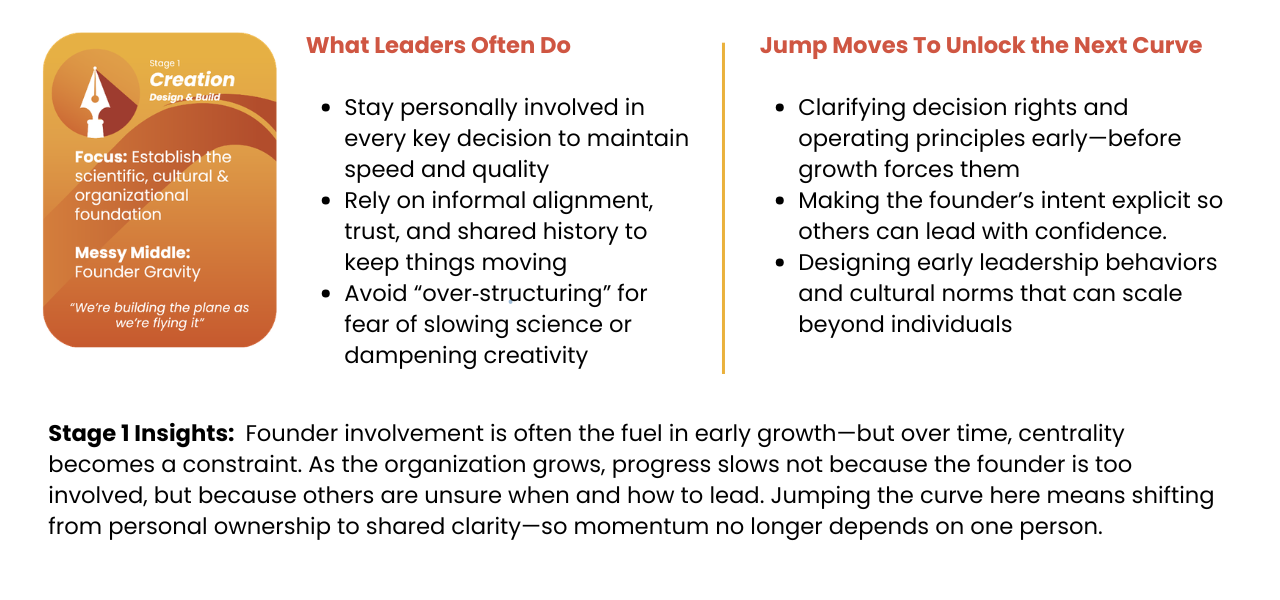
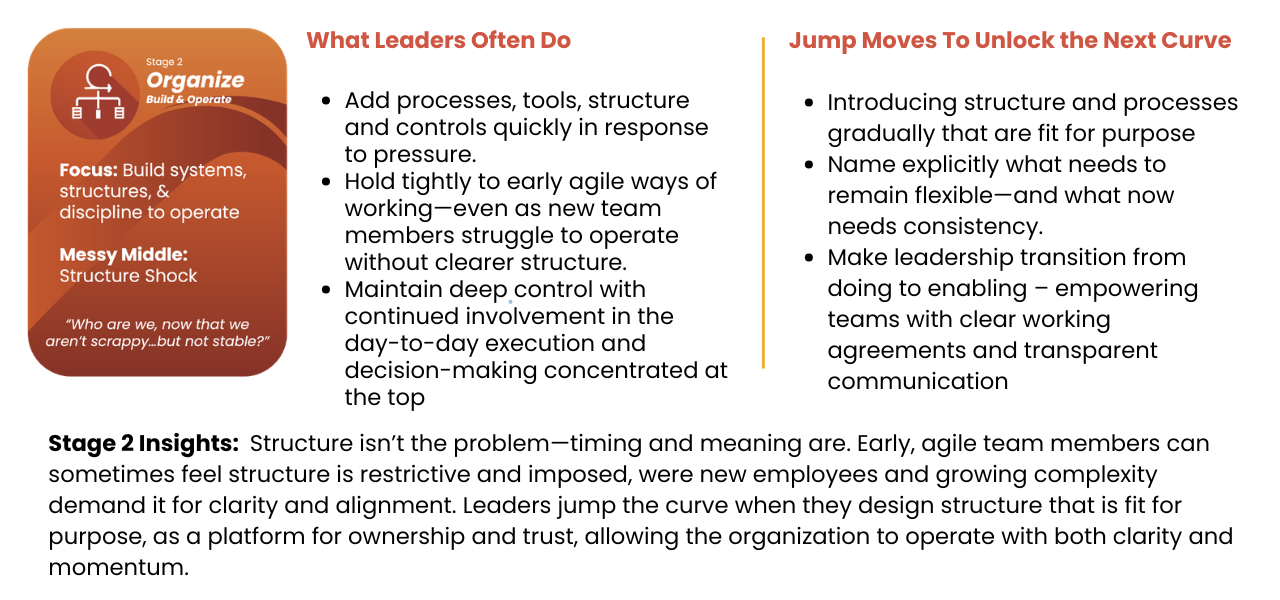
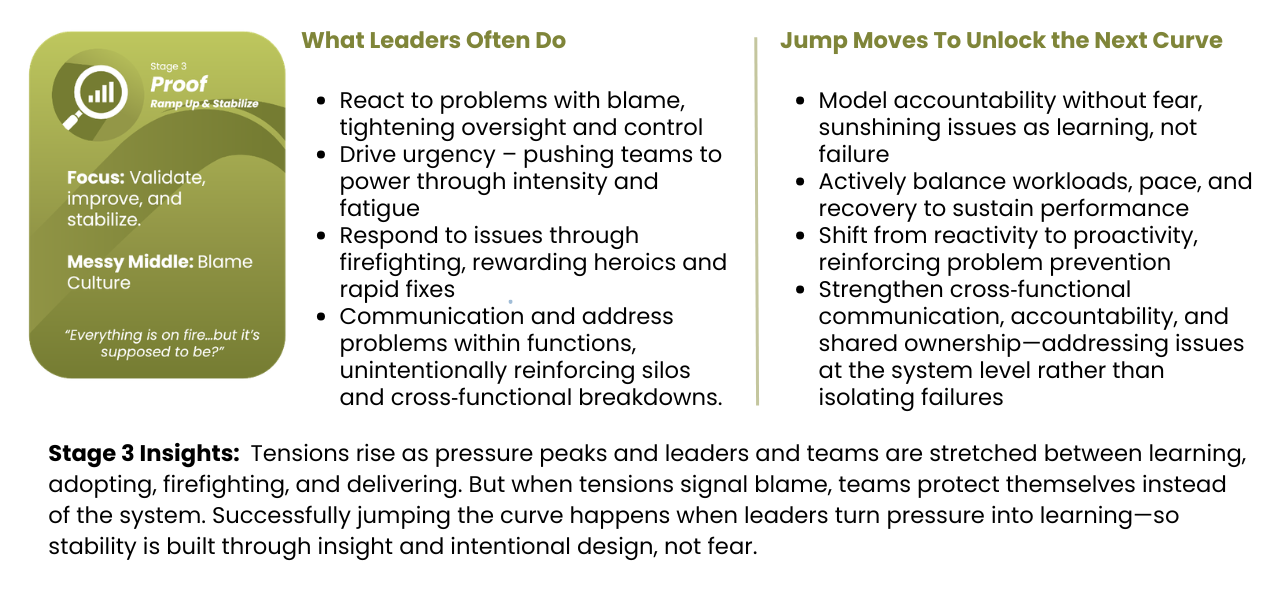
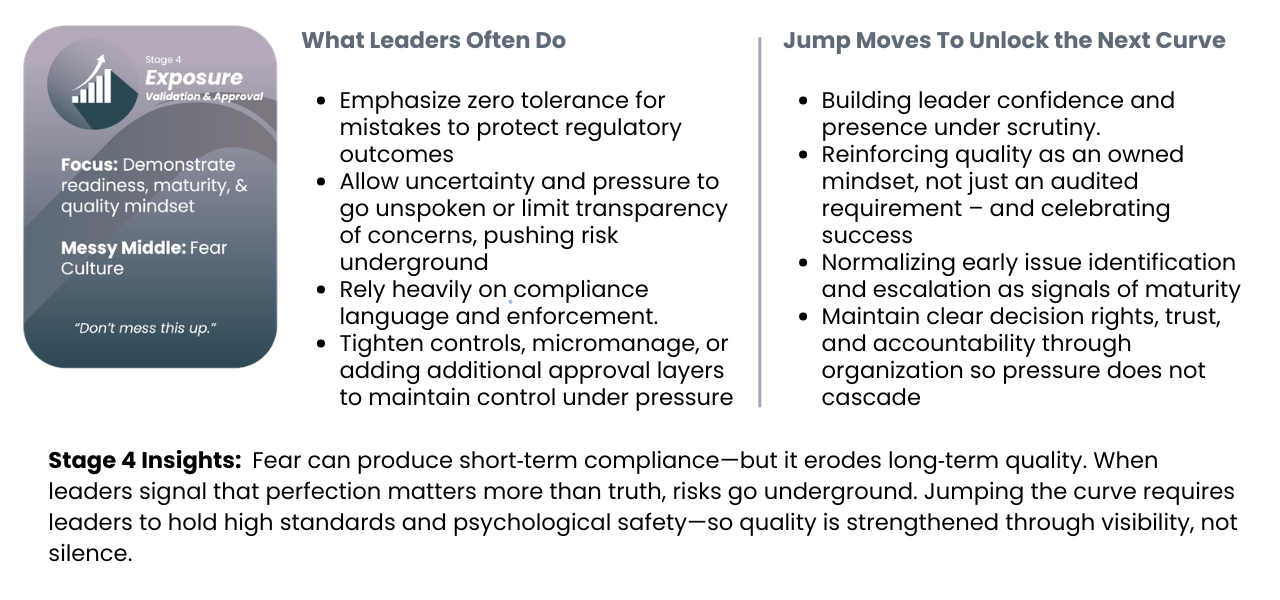
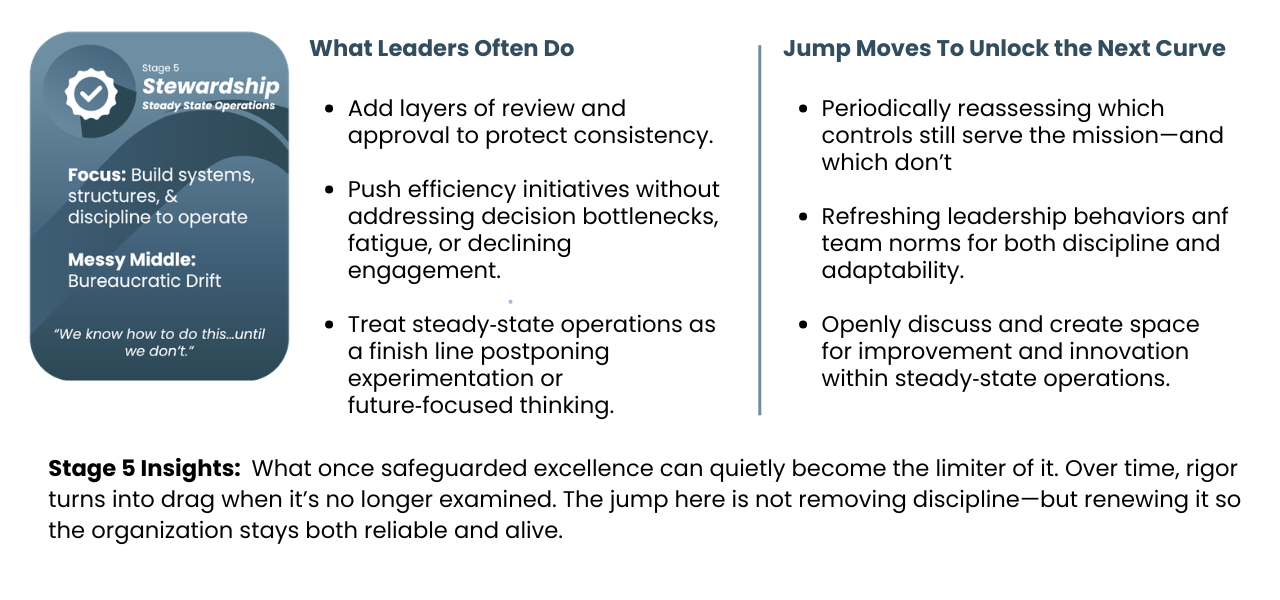
This is the messy middle: the unavoidable space between what once worked and what’s required next. As organizations move through predictable growth curves, each stage introduces new pressures and cultural tensions.
Life Sciences organizations rarely stall because leaders and teams lack commitment - they stall because growth itself changes the rules. The work of leadership isn’t to push harder through these moments, but to recognize when it’s time to evolve how the system operates.
We call this intentional evolution Jump Moves – the deliberate shifts in leadership behaviors, decision‑making, ways of working, and cultural norms that allow the organization to move from one growth curve to the next.
In this article, we’ll explore common, well‑intentioned moved leaders often make—moves that made sense before but quietly constrain progress for the next growth curve. We’ll also introduce a set of Leadership Jump Moves designed to navigate the messy middle and create the conditions for your organization’s next stage of growth.